
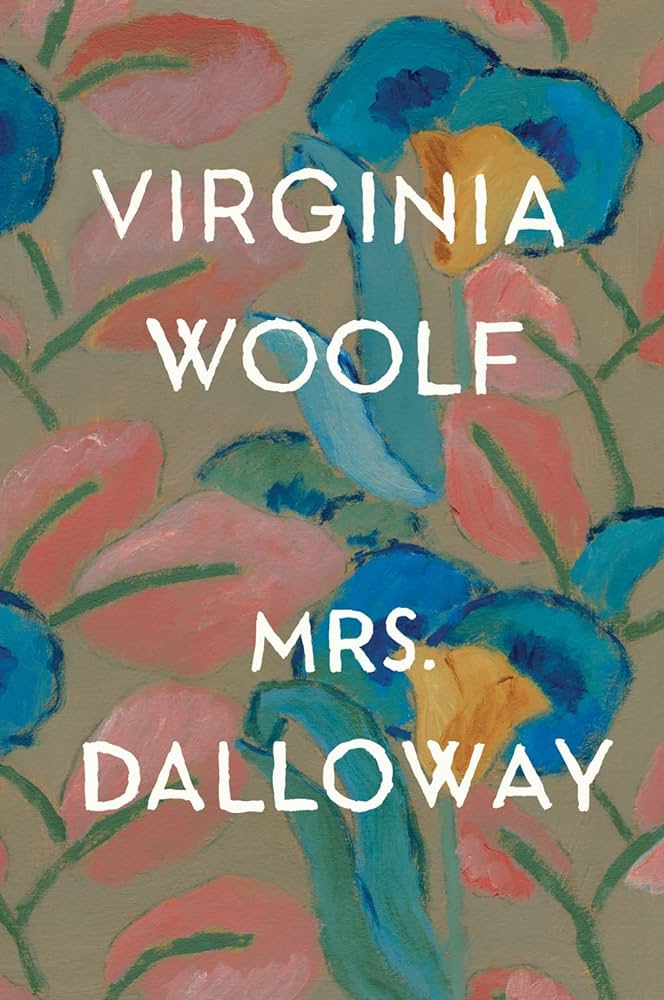
Mrs. Dalloway is a modernist novel by Virginia Woolf. It was published on May 14, 1925 and tells one day in the life of two distinct characters, Clarissa Dalloway and Septimus Warren Smith. Though it is a relatively short 224 pages, the book is quite a difficult read given its innovative (for the time at least) stream of consciousness style which is constantly detailing the inner thoughts of many different characters. This difficulty of reading is one of the mainstays of Woolf’s writing and why some love her work and others find it unenjoyable. I myself, fall in the latter camp. I found the book to be stylistically tedious a problem which is only compounded by the books lack of focus. To me, Woolf seemed to be putting down lots of ideas on the page but never fully developing them. While this might be realistic in the sense that people do think in a quick and sporadic way oftentimes, it does not make for an engaging novel. I felt at times, as if I were reading a 200-page collection of extremely short poetry because, while the prose is brilliant and the use of vocabulary is to be applauded, the story is extremely lacking. However, Mrs. Dalloway is not a book of poems and it simply fails to keep my interest as a novel. All the ideas in the book are one dimensional and fleeting. There is no consistent messaging except for perhaps a monotonous sense of existentialism and a rather boring portrayal of the struggles of dealing with PTSD. This may be a personal problem as I have found the works of existentialist literature like The Stranger, that I read to be somewhat pointless and uninspiring.
In the past, many have lauded Woolf for her innovative style and her deconstructing of the novel format. However, I would caution against praising innovation for its own sake. It is possible to recognize that oftentimes, experimentation leads to results that are worse than what came before. In that case, the endeavor itself has merit but the finished product must be called out as falling short of its goal. I don’t think Virginia Woolf transformed the novel format in a fresh new way, but instead, she rejected the traditional narrative storytelling in favor of publishing a collection of thoughts. While these thoughts, individually reveal an interesting and proficient writer, as a cohesive narrative they are a bloated mess with little structure.
I would not recommend Mrs. Dalloway to anyone who is not already certain of their love of modernist stream of consciousness literature as I found the novel to be a tedious exercise to finish. I can respect the technical abilities of Woolf and the innovative qualities of the work, but as a finished product, the novel falls woefully short for me, failing to leave any lasting impact or deeper message.