
Table Of Contents
Anatomy of a Fall Review

Anatomy of a Fall is a courtroom drama which starts strong but gradually loses steam over its stretched-out runtime with the subversion of expectations in the finale being the nail in the coffin of what turns out to be an inconsequential story with no strong resolution. The film is directed by Justine Triet and tells the story of novelist Sandra Voyter and her son Daniel, as she is put on trail for the death of her husband, Samuel Maleski, who mysteriously falls from the top floor of their house.
Anatomy of a Fall is technically adequate with the cinematography, set design, and costuming all serving their purpose perfectly well but not rising above what is expected. The music in the film is largely diegetic with Daniel’s piano playing acting as a recurring motif (As a side note, I remember playing the Chopin piece that Daniel duets with his mother) . The acting is the strongest aspect of the film with the entire cast bringing great performances to their respective rolls. Sandra Hüller as the protagonist Sandra Voyter gives a convincing performance portraying someone who the viewer is never quite sure to paint as the villain or the victim of the situation. Indeed, the way the script works presents Sandra Voyter as an unreliable narrator who has her own biases is genius because it causes tension in the viewer over the doubt are made to feel. While everyone else on the cast fulfills their parts, no one stood out to me on the same level as Sandra Hüller.
The plot of Anatomy of a Fall is both its strength and its weakness. From the start of the film to around the one-hour mark, the film is perfectly engaging with the mystery of how the death of Samuel Maleski keeping the viewer interested in wanting to learn more. However, the film drags on for two long and its two-and-a-half-hour runtime begins to work to its detriment. Eventually, the audience gets bored, not because of the characters, but because it quickly becomes clear that the factual “truth” of Maleski’s death will never be known. Once this conclusion is reached, the court scenes become very tedious. This is compounded by the finale of the film which attempts to conclude the movie by stating the message, that “sometimes we have to decide what the truth is for ourselves”. However, if this truly was the point of the film, then it would benefit from cutting out much of the trial scenes and continuing a good deal past the trial to reveal how choosing our own truth affects how we live our lives. Instead, the theme feels underdeveloped and an unsuccessful subversion of expectations. As a general rule, in order to successfully subvert expectation, a work of art must not only deviate from the expected, but also replace the expected event with something new and equally interesting. Anatomy of a Fall fails to do this and the subversion is infinitely less interesting than discovering the truth of Maleski’s death. This causes the film to finish on a bad note in my mind and leave much less of an impression that it otherwise could have. The ambiguity still present at the end of the film does not make me think more, instead, it annoys me because the effect of the ambiguity post-trial is left unexplored.
All in all, Anatomy of a Fall is a courtroom drama which drags on for a bit too long and has a very unsatisfying conclusion which makes it a film that I would not recommend to friends.
The Nylon Curtain Review

The Nylon Curtain is the eighth studio album from singer-songwriter Billy Joel and was released on September 23, 1982. The album delves into the theme of pessimism and worry over the uncertain future following the Vietnam war and the societal upheaval that started in the 60s with the widespread disillusionment in the American dream. It is one of Joel’s most sonically distinct albums with the tracks steering away from the traditional pop-rock hit that the artist is well known for into a more mature and unique sound focused more on creating a certain atmosphere than getting stuck in the listener’s head. Billy Joels tenor vocals act as the voice of the everyday man as he narrates the sorrows and struggles of the era but still maintains a hopeful and resolute resolve in the future.
The opening track off The Nylon Curtain, “Allentown” is an anthemic tune which vividly recreates the feelings of restlessness and angst felt by the postwar generation. Despite the challenging times anticipated by the song, the steady piano chords suggest a sense of optimism through hard work and determination. The album continues with “Laura” a dynamic piece which describes the toxic effect a person can have on one’s life. The track begins in a major key with a catchy verse before moving onto the chorus which is grating and uncomfortable on first listen using jarring chords and a tense vocal line. As is to be expected, the songwriting on the bridge is superb and I can’t get enough of the open hi hats (I think that’s what they are) in that section. Next is “Pressure”, an extremely relatable song which effectively communicates the feeling of stress and anxiety that we have all felt at on point or another. The slightly hectic synth motif that plays at the beginning of the song and the chorus is not only very catchy but perfectly encapsulates the frenetic and chaotic energy of the song. “Goodnight Saigon” showcases the serious side of the album with a long and slow introduction which gradually builds into a booming chorus. The imagery of the Vietnam War from the soldiers’ point of view is deeply moving and the by the time the chorus finally hits three minutes in it can’t help but rally the listener’s spirit. The verse has a hauntingly beautiful quality which is complemented wonderfully by Joel’s innocent and expressive voice. The song serves as a symbol of the strength we have together and a reminder of the human face behind every large movement and conflict. The album continues with “She’s Right on Time” which brings back the positive energy of two people in love finally coming together. Once again, Billy Joel writes a good melody but an even better bridge which has a killer melody. Next is “A Room on Our Own” which is reminiscent of “Laura” describing a rocky relationship and the need for space amidst conflict. The song features a keyboard solo which is fun to hear although the repetitive production and lackluster tune make the song forgettable in the long run. The next song, “Surprises” is catchy but lacks the emotional depth of previous tracks on the record. Even so, it is still a fun tune with a dynamic melody and good light-rock production. Continuing on, “Scandinavian Skies” is a weird song which goes on for a while and doesn’t have the typical pop form of Billy Joel’s other work. However, its use of strings and contrasting section make it a very interesting track with a lot going on. “Where’s the Orchestra” is the closing track on the album and is much similar to the typical Billy Joel standards. It has a beautiful clarinet accompaniment and a simple piano backing. Joel’s melody is engaging and soulful while the song tells us to take life for what it is. As a nice touch the tune of “Allentown” makes a return in the orchestral finish to the track.
To finish, The Nylon Curtain is a fantastic album which brings Billy Joel’s undeniable songwriting ability to a more interesting sound and subject matter. While the pop ballads are not as catchy, the emotion and depth present in the album more than enough makes up for this. I would recommend that everyone listen to The Nylon Curtain at least once.
Mrs. Dalloway Review
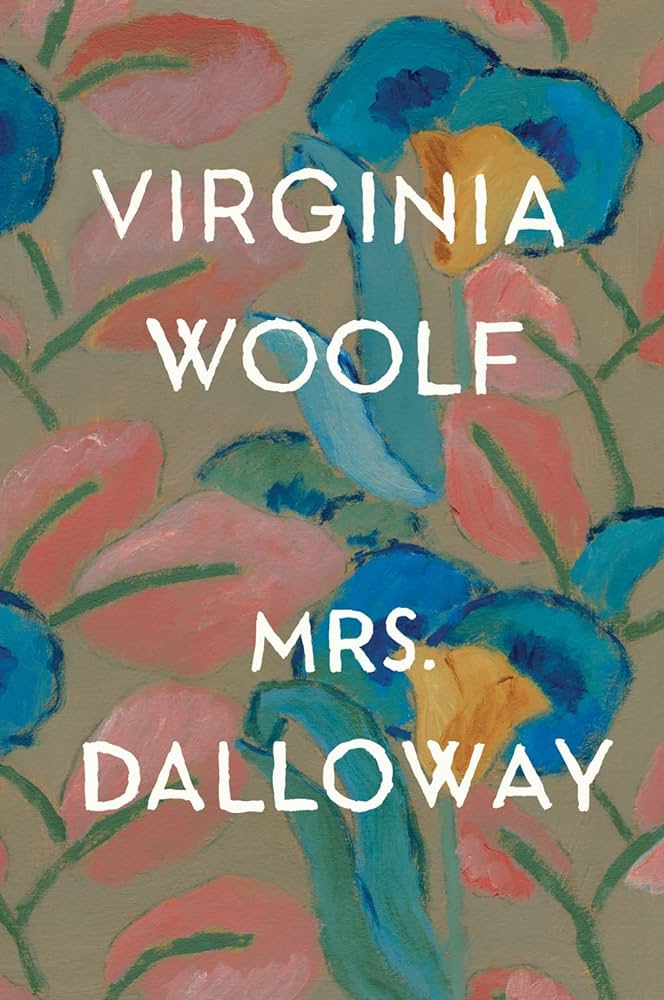
Mrs. Dalloway is a modernist novel by Virginia Woolf. It was published on May 14, 1925 and tells one day in the life of two distinct characters, Clarissa Dalloway and Septimus Warren Smith. Though it is a relatively short 224 pages, the book is quite a difficult read given its innovative (for the time at least) stream of consciousness style which is constantly detailing the inner thoughts of many different characters. This difficulty of reading is one of the mainstays of Woolf’s writing and why some love her work and others find it unenjoyable. I myself, fall in the latter camp. I found the book to be stylistically tedious a problem which is only compounded by the books lack of focus. To me, Woolf seemed to be putting down lots of ideas on the page but never fully developing them. While this might be realistic in the sense that people do think in a quick and sporadic way oftentimes, it does not make for an engaging novel. I felt at times, as if I were reading a 200-page collection of extremely short poetry because, while the prose is brilliant and the use of vocabulary is to be applauded, the story is extremely lacking. However, Mrs. Dalloway is not a book of poems and it simply fails to keep my interest as a novel. All the ideas in the book are one dimensional and fleeting. There is no consistent messaging except for perhaps a monotonous sense of existentialism and a rather boring portrayal of the struggles of dealing with PTSD. This may be a personal problem as I have found the works of existentialist literature like The Stranger, that I read to be somewhat pointless and uninspiring.
In the past, many have lauded Woolf for her innovative style and her deconstructing of the novel format. However, I would caution against praising innovation for its own sake. It is possible to recognize that oftentimes, experimentation leads to results that are worse than what came before. In that case, the endeavor itself has merit but the finished product must be called out as falling short of its goal. I don’t think Virginia Woolf transformed the novel format in a fresh new way, but instead, she rejected the traditional narrative storytelling in favor of publishing a collection of thoughts. While these thoughts, individually reveal an interesting and proficient writer, as a cohesive narrative they are a bloated mess with little structure.
I would not recommend Mrs. Dalloway to anyone who is not already certain of their love of modernist stream of consciousness literature as I found the novel to be a tedious exercise to finish. I can respect the technical abilities of Woolf and the innovative qualities of the work, but as a finished product, the novel falls woefully short for me, failing to leave any lasting impact or deeper message.
The Holdovers Review

The Holdovers is a breath of fresh air in a cinema landscape dominated by faux grandiosity, as its simple story focuses on the real and flawed human characters through an examination of rather ordinary events in their lives. Directed by Alexander Payne, the film tells the story of the strict and disliked classics teacher Paul Hunham (Paul Giamatti), as he is forced to look after the handful of private school students who are staying over at the school during Christmas break.
The cinematography of The Holdovers is understated but excellent. It lets the heart of the story, the characters, breath without being intrusive at all. Although it is filmed using digital lenses, the movie still retains a retro portrait look which further contributes to the nostalgic quality. The cinematography also works with the set design to help characterize the self-imposed isolation and the slow bonding amongst the main characters. Though it takes place in the 70s, The Holdovers never felt like a period piece and felt more timeless than anything. This holds true except for the music of the film, which borrows heavily from popular 70s bands such as The Allman Brothers Band and Tony Orlando and Dawn.
The actors in The Holdovers are uniformly excellent with Paul Giamatti and Da’Vine Joy Randolph standing out from amongst the cast. Paul Giamatti does a near perfect job of portraying the gruff but soft-hearted Paul Hunham. He strikes the right balance between being someone the audience can love but also retaining some flaws which make him realistic. While Da’Vine Joy Randolph’s performance lacked the time and depth for it to be an all-time great, she has an imposing presence in the film and adds some much-needed gravitas to the simple story.
The story of The Holdovers is what really sold me on the film. It is one of those films which does not follow a standard three-act narrative structure but still maintains audience engagement. This is due to the intense focus on the characters and their relationship. The actors’ performances and the depth of the characters means that they are entertaining even when doing mundane tasks because we understand their motivations, struggles, and goals. There is no predictability to the story and even though the stakes are not high, the audience has bought into the characters early on and is eager to find out what happens next. The film also has a great amount of charm and heart. It’s practically a Christmas movie given that it takes place over Christmas break and has a very feel-good message throughout.
Overall, I would recommend that everyone go and see The Holdovers as soon as possible. It is a fantastic nostalgic film with likeable characters and a high likelihood of giving you a warm fuzzy feeling in the depths of your soul by the time its finished.